
Upside Down
Supercent, Inc.Role Playing
4.396.00 Reviews
- Version
- 1.10.0
- Installs
- 10.00K
- Age Rating
- Everyone
Screenshots
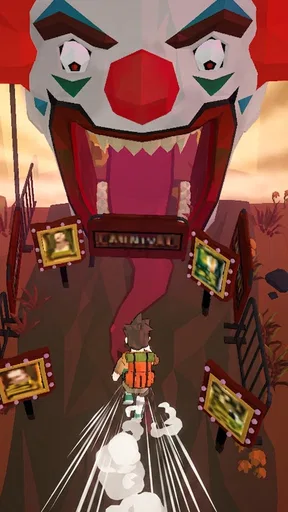
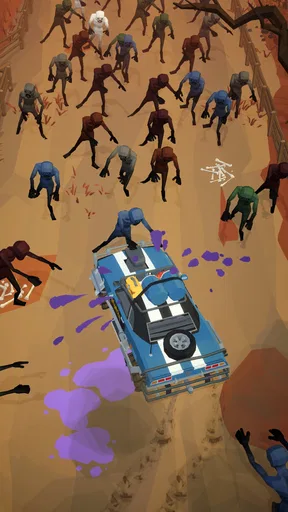
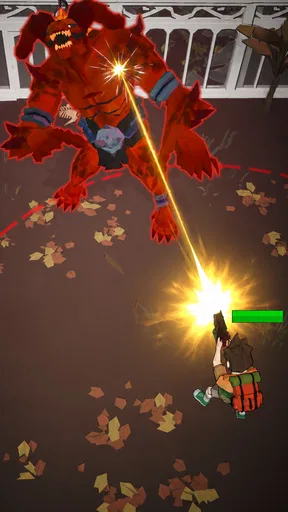
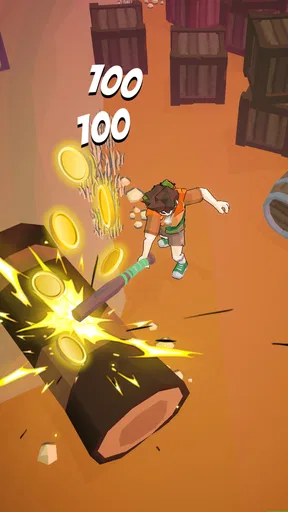
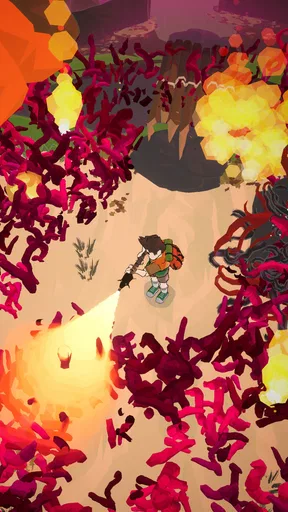
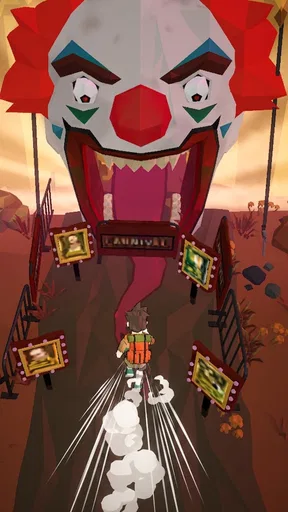
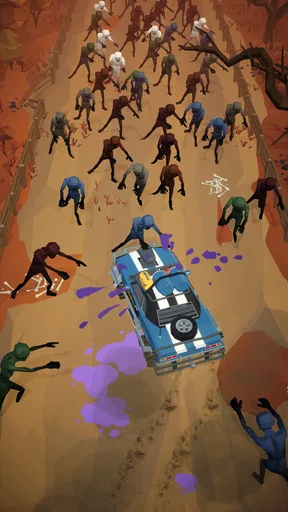
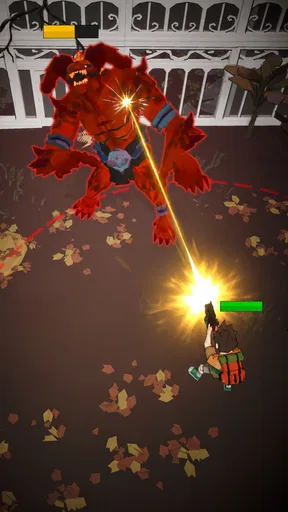
Our Review of Upside Down
 Analysis by Appyee
I went into Upside Down expecting a compact role-playing adventure, but what stayed with me was its unusual sense of direction. The game places you in a mysterious action-adventure world and gives you a clear personal reason to keep moving: rescue Amy. That objective makes the experience easier to understand than many mobile RPGs that bury the player under menus, currencies, and long-term systems before the story has a chance to matter.
It is a free game from Supercent, Inc., rated for Everyone, and it fits best into short sessions where you want movement, danger, and a story thread without committing to a huge traditional role-playing game. I found it most appealing when I treated each play session as a small attempt to understand the world rather than rushing through it as if it were only an action game.
The store page presents it as a mysterious rescue adventure, but that description does not really explain the practical question: who will enjoy spending time with it? My answer is that it suits players who like accessible mobile adventures with a strange atmosphere and a straightforward goal. It is less suitable for anyone looking for a deep party-building RPG, a large open world, or the complexity of a long-form console role-playing game.
How I played Upside Down and what makes its routine work
I found that the most useful way to judge Upside Down is to look beyond whether its rescue story sounds appealing and ask how comfortably its play routine fits different people. I’ll start with the way I approach a session, then turn to the practical questions of reading the screen, handling the controls, and choosing when to play. That makes it easier to see whether its focused design works for you.
A simple baseline that keeps the story moving
My most reliable approach was to begin each session with one modest goal: advance the current situation, learn something about the area, or become more comfortable with the action rather than trying to do everything at once. That sounds basic, but it matters here because the rescue premise gives the game a natural forward pull. When I focused only on winning the next encounter, the setting felt less memorable. When I paid attention to the mystery around Amy, the individual moments had more purpose.
The game belongs to the role-playing category, yet I would not approach it like a menu-heavy statistics simulator. Its strongest appeal is the combination of movement, danger, and narrative curiosity. I found it easier to settle into when I accepted that the adventure is meant to be understood through progress and observation, not through immediately mastering a large collection of systems.
A useful everyday scenario is a short evening break. I can open the game, play through a small piece of the adventure, and stop before the session becomes a major commitment. That makes it a reasonable choice for a phone or tablet, especially for someone who wants a story-led game but does not want to spend the entire evening learning an elaborate interface. The trade-off is that players who need a strong sense of long-term character planning may find the experience lighter than expected.
Why the rescue objective helps more than a generic quest
Amy is not just a name attached to the store summary; the rescue objective gives the experience an emotional anchor. I always had a reason to interpret the strange world around me instead of treating every obstacle as an unrelated stage. That focus also helps new players understand what they are supposed to care about, which is valuable in a mobile game designed to be picked up quickly.
My advice is to avoid skipping through the atmosphere mentally, even when the immediate action seems more attractive. The mysterious setting is one of the main reasons to choose this game over a purely reflex-based alternative. If you only want fast combat and do not care about the surrounding story, you may be overlooking the part that gives the adventure its identity.
Settings and habits worth checking before settling in
I would begin by checking the available in-game settings before starting a serious run. I am not treating those options as secret advantages, because they are not a substitute for skill, but small adjustments can make a mobile adventure more comfortable. Look for the controls and presentation choices that match the way you hold your device, then keep that arrangement consistent. Constantly changing the layout makes a short game feel harder than it needs to be.
It is also worth making sure the game runs comfortably on your device before you become invested in the story. The minimum operating-system requirement is Android 9, so Android users should check compatibility before downloading. The current version is 1.10.0, and keeping the installation current is the sensible way to avoid judging the experience through an outdated build.
Because the game is free to download, I would not treat the initial installation as a financial commitment. However, optional purchases range from $0.99 to $99.99 per item. That is a wide range, so I recommend deciding in advance whether you are playing strictly without spending or whether you are comfortable considering purchases later. A clear personal rule prevents the store layer from interrupting the rescue story.
Faster patterns that make short sessions feel better
Experienced players can make progress feel smoother by repeating a simple rhythm: enter a section, learn its immediate danger, adjust your approach, and only then worry about speed. My best sessions came from resisting the urge to repeat the same failed action immediately. A short pause to identify what caused the mistake was more useful than frantic retries.
Another practical habit is to use the beginning of a session as a warm-up. Instead of spending the first moments trying to make perfect progress, I used them to reacquaint myself with movement and timing. This is especially helpful when I had not played for a day or two. Mobile controls can feel different depending on grip, screen position, and whether I am standing or sitting, so a brief adjustment period reduces unnecessary frustration.
I also recommend separating exploration from urgency. When the game presents a moment that feels mysterious, I slow down and look at what the environment is communicating. When the immediate challenge is clearly asking for action, I stop overthinking the scenery and concentrate on the encounter. That switch between curiosity and focus is a more effective routine than playing every section at exactly the same pace.
For people who play during commutes or short breaks, the main trade-off is concentration. The game may be easy to open in a spare moment, but a story involving rescue and mystery is harder to appreciate when notifications, noise, or interruptions keep pulling attention away. I would choose it for a quiet break rather than a situation where I expect to stop every few seconds.
Where the role-playing label helps and where it can mislead
Calling this a role-playing game sets an expectation of progression and personal involvement, and that is fair. Still, I would not compare it directly with enormous RPGs built around party composition, extensive dialogue trees, or detailed equipment management. Upside Down is more approachable because it keeps the central idea visible: move through an action-adventure world and work toward Amy’s rescue.
That makes it a good alternative to a sprawling RPG when I want something more focused. It is also a better fit than a purely casual puzzle game when I want a reason to continue from one session to the next. On the other hand, players who love optimizing builds, collecting large rosters, or making complicated strategic decisions should look elsewhere. The game’s focused structure is an advantage for accessibility, but it is also a boundary.
Advanced limits and the choices I would make as a regular player
The biggest limitation is not necessarily a problem with execution; it is the scale of the experience. A focused rescue adventure cannot offer the same depth as a large role-playing production without becoming a different kind of game. I would therefore judge it by whether its atmosphere and forward momentum are enough to hold my attention, not by whether it contains every system found in a premium RPG.
The free-to-play structure is another point to consider carefully. The game costs nothing to start, which makes experimentation easy, but the presence of in-app purchases means some players will want to keep an eye on their spending habits. I prefer to play the opening portion naturally before deciding whether any optional purchase improves my enjoyment. If the story and action already work for me, I do not feel pressure to add spending to the experience.
Its Everyone content rating makes it approachable for a broad audience, but that does not mean every player will enjoy it equally. Younger or less experienced players may appreciate the clear rescue goal and accessible format. More demanding RPG fans may find the adventure too restrained. Parents choosing it for a child should still consider whether the child enjoys mystery and action, rather than assuming the age rating guarantees a perfect match.
The game had an average rating of 4.3 from around 1.4 thousand ratings, with roughly 96 written reviews, and it has passed 10 thousand installs. I see those figures as a useful sign that people are trying it, not as proof that it will suit everyone. My own reaction was positive because the game knows what kind of mobile experience it wants to be. It is easier to recommend when the reader understands that focus.
Three practical insights I would keep in mind
Use a consistent control setup. Changing the arrangement between sessions can make movement feel unreliable. Once the controls feel comfortable, leave them alone and build familiarity instead of searching for a perfect layout every time.
Make the mystery part of your progress strategy. If you rush through every unusual moment, the action may become repetitive. Paying attention to the world gives the rescue objective more weight and helps distinguish this game from a basic sequence of fights.
Set a purchase boundary before playing. Since individual in-app purchases can reach $99.99, deciding your limit in advance keeps the free starting point from turning into an unplanned expense.
Play in focused blocks. A short, uninterrupted session is more valuable here than a longer distracted one. The game’s story and action work together, so repeatedly losing your place can weaken both.
Who should install it, and who should skip it?
I would recommend Upside Down to someone who wants a free mobile adventure with a clear rescue mission, a mysterious setting, and role-playing flavor without the intimidating scale of a major RPG. It is particularly appealing if you like games that can be enjoyed in manageable sessions but still give you a reason to return.
I would skip it if my priority were competitive multiplayer, deep character theorycrafting, a huge explorable map, or a completely purchase-free structure. I would also avoid choosing it for a child who dislikes suspenseful environments or action challenges, even though the content rating is Everyone. The right audience is someone who values mood and forward momentum more than endless systems.
My final view after settling into its rhythm
Upside Down works because it keeps the central promise understandable: Amy needs rescuing, and the world around that mission is strange enough to make me curious. Supercent, Inc. has shaped it as an accessible action adventure with role-playing elements rather than an overwhelming all-purpose RPG. That focus gives it a clear identity, even if it also limits how much depth some experienced players may find.
I like it most when I play with patience, keep my controls familiar, and treat each session as a small piece of a larger mystery. The free entry point makes it easy to test, while the optional purchase range is a reason to stay deliberate. With its release on Jan 13, 2025 and its current version at 1.10.0, it is a straightforward recommendation for mobile players who want an approachable story-led adventure.
My honest verdict is that this is not the game I would choose when I want a massive, endlessly customizable RPG. It is the game I would choose when I want a focused mobile journey, a memorable rescue goal, and enough action to keep the story moving. If you value atmosphere, clarity, and short repeatable play sessions over overwhelming depth, this adventure is worth trying.
Verdict
Strengths of Upside Down
- Clever gravity-based puzzles reward experimentation and careful planning.
- Distinctive upside-down perspective makes familiar platforming feel fresh.
- Controls are simple to learn and responsive during most challenges.
- Short levels make it easy to play in quick sessions.
- Minimalist visuals keep the focus on solving each puzzle.
Limitations of Upside Down
- Some solutions feel trial-and-error rather than logically signposted.
- Difficulty can increase abruptly in later stages.
- The visual style may become repetitive during longer sessions.
- Limited guidance can frustrate players who get stuck.
- Replay value is modest once the main puzzles are completed.
Other Releases by Supercent, Inc.
View All
Snake Clash!
Arcade4.5

Pizza Ready!
Simulation4.4

Prison Life: Idle Game
Role Playing4.0

Dessert Factory Idle
Arcade4.7
Similar Picks in This Category
View All
Hair Dye
CrazyLabs LTD4.4

Monster High™ Beauty Salon
CrazyLabs LTD4.5

Bus Simulator - Bus Games 3D
Jima Apps4.4

Flight Pilot: 3D Simulator
Wildlife Studios4.1


Super Stylist Fashion Makeover
CrazyLabs LTD4.4
Frequently Asked Questions
What is Upside Down and how does the game work?
Upside Down is a casual puzzle and reflex game built around inverted movement and changing perspectives. During gameplay, you guide the character or object through obstacles while the screen orientation and controls create an intentionally confusing challenge. The early levels are fairly approachable, but later stages require careful timing, memorization, and quick reactions. It is designed for short sessions, making it suitable for playing while commuting or during a quick break.
Is Upside Down free to download and play?
Upside Down can generally be downloaded for free, although the exact availability of advertisements, optional purchases, and premium content may depend on the Android or iOS version. The free experience lets you try the main gameplay before deciding whether additional features are worthwhile. Users should check the store listing for current pricing, in-app purchase details, and any limitations, since these terms can change after updates.
Does Upside Down require an internet connection?
The core gameplay of Upside Down is usually suitable for offline play once the application has been installed, which is convenient when you do not have reliable mobile data or Wi-Fi. However, an internet connection may still be needed for downloading updates, displaying advertisements, restoring purchases, submitting scores, or using online features. If offline access is important to you, verify the current store description and test the game after temporarily disabling your connection.
Is Upside Down suitable for children and casual players?
Upside Down is easy to understand because its basic objective is introduced quickly, but the reversed controls and increasingly demanding levels can become frustrating for younger players. It does not usually depend on complicated text or advanced strategy, so casual users can start playing without a long tutorial. Parents should still review the age rating, advertising, purchase settings, and privacy information before allowing children to download and use the app.
What devices are compatible with Upside Down, and does it run smoothly?
Compatibility depends on the particular version of Upside Down available through Google Play or the Apple App Store. On recent phones and tablets, the game should generally run smoothly, with responsive controls being especially important for timing-based challenges. Older or entry-level devices may experience slower loading, reduced performance, or display issues. Before downloading, check the required operating-system version, available storage, and the latest user reviews for device-specific problems.
Play our best games!


